
 +
+
 By
By AI Sundarbans Wildlife Spotting Guide: Smarter Wildlife Monitoring
Artificial Intelligence (AI) is transforming wildlife conservation in the Sundarbans by making camera trap monitoring faster, more accurate, and less labor-intensive. Modern AI models such as SpeciesNet can automatically detect animals, remove empty images caused by wind or vegetation, and identify more than 1,295 wildlife species worldwide with high accuracy.
Instead of manually reviewing thousands of camera trap photos, researchers can use AI to instantly filter blank images, recognize species, and organize wildlife data into reports and charts. This allows conservation teams to spend more time studying endangered species like the Royal Bengal Tiger, fishing cat, leopard cat, spotted deer, wild boar, crocodiles, and rare birds.
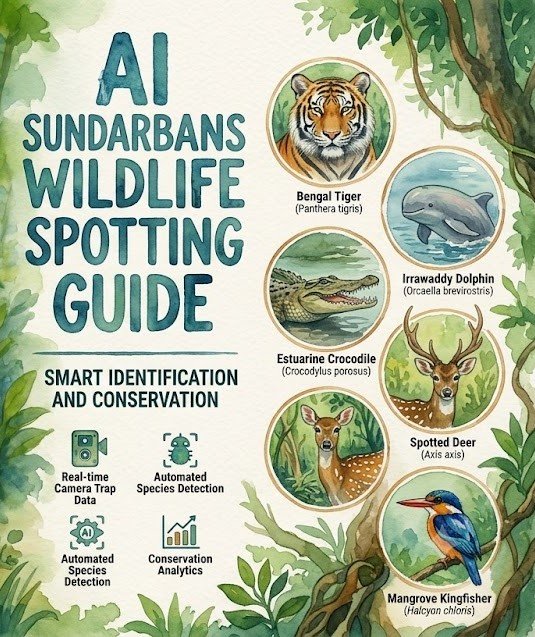
AI-powered wildlife monitoring also supports:
- Automatic blank image filtering
- Fast wildlife species identification
- Biodiversity monitoring
- Population and habitat analysis
- Anti-poaching surveillance
- Real-time conservation alerts
- Edge AI camera systems for remote forests
Although AI greatly improves efficiency, every wildlife identification should still be verified by experts to ensure scientific accuracy. As AI models continue learning from millions of camera trap images, they will become even more reliable for protecting the unique biodiversity of the Sundarbans.
AI-assisted camera trapping is shaping the future of wildlife research by helping conservationists monitor ecosystems more efficiently while minimizing disturbance to animals and their natural habitat.