
 +
+
 By
By Mangrove Survival Guide: Protecting Coastal Forests for the Future
Mangroves are among the world’s most valuable ecosystems, protecting coastlines from cyclones, reducing erosion, storing up to four times more carbon than tropical rainforests, and providing vital habitat for fish, birds, and wildlife. In the Sundarbans, healthy mangrove forests are essential for the survival of the Royal Bengal Tiger and millions of people who depend on coastal resources.
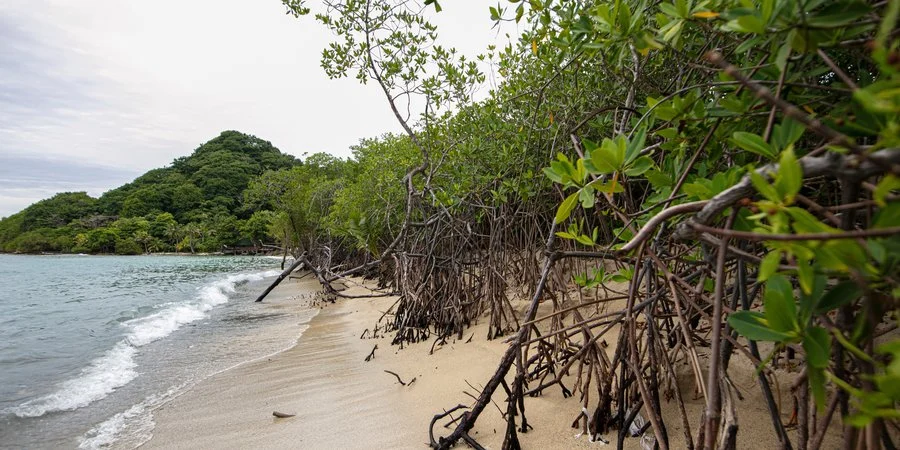
Pic By – WWF
The Seawall: Dense roots block wave energy and protect coastal villages from storms and tsunamis.
The Carbon Vault: They store 3 to 5 times more carbon than tropical upland forests. This makes them vital in the fight against climate change.
The Fish Nursery: They provide sheltered breeding grounds for over 3,000 fish species, supporting local food security and economies.
Breathing Roots: Known as pneumatophores, these roots stick out of the mud like straws. They allow the tree to breathe even when underwater. [1]
Salt Management: Some species block up to 90% of salt at their roots. Others let salt in and push it out through special pores on their leaves. [1]
Live Seeds: Instead of dropping a plain seed, mangroves produce “propagules”. These are live seedlings that begin growing while still attached to the parent tree. They drop, float with the tide, and plant themselves in the mud.
Climate change, rising sea levels, stronger storms, pollution, and habitat destruction threaten mangrove ecosystems worldwide. Successful mangrove restoration requires science-based planning, restoring natural water flow, planting native species, protecting existing forests, and involving local communities in long-term conservation.
Modern conservation tools, including Climate-Smart Mangrove planning and AI-powered monitoring, help identify climate risks, improve restoration success, and strengthen ecosystem resilience. These technologies enable conservationists to make informed decisions while adapting mangrove forests to changing environmental conditions.
Protecting and restoring mangroves is one of the most effective nature-based solutions for climate change, biodiversity conservation, carbon storage, sustainable fisheries, and disaster risk reduction. By combining scientific research with community participation, we can ensure that the Sundarbans’ mangrove forests continue to protect wildlife, coastal communities, and future generations.
Restoration and Conservation
Fix the Water Flow: Mangroves need water to flow in and out. Cleaning blocked pipes and digging channels is often more effective than just planting trees. [
Planting Native Species: If replanting is required, use seedlings that naturally belong in that specific mud and tide level.
Involve Locals: Coastal communities rely on mangroves for their livelihoods. Educating and including them is key to protecting these trees.