
 +
+
 By
By The Sundarbans is one of the world’s finest birdwatching destinations, home to nearly 300 bird species, including around 139 migratory birds that arrive during both winter and summer. Moreover, this UNESCO World Heritage Site supports several globally threatened species, making it a paradise for bird lovers, photographers, and nature enthusiasts. Whether you explore the mangrove creeks at sunrise or enjoy a peaceful sunset cruise, visitors can experience exceptional birdwatching from silent country boats. In addition, watchtowers, rivers, mangrove forests, and nearby villages provide excellent opportunities to observe birds in their natural habitats.
The best time for birdwatching in the Sundarbans is from November to February, when thousands of migratory birds arrive alongside resident species such as kingfishers, mangrove whistlers, ospreys, herons, sea eagles, sunbirds, storks, and sandpipers. At the same time, visitors have an excellent chance to spot iconic wildlife, including the Royal Bengal Tiger, spotted deer, saltwater crocodiles, Gangetic dolphins, fishing cats, otters, and wild boars. Furthermore, winter enhances the beauty of the mangrove forest as native plants and seasonal blooms create a vibrant natural landscape. As a result, the Sundarbans becomes an unforgettable destination for birdwatching, wildlife photography, and immersive nature experiences.
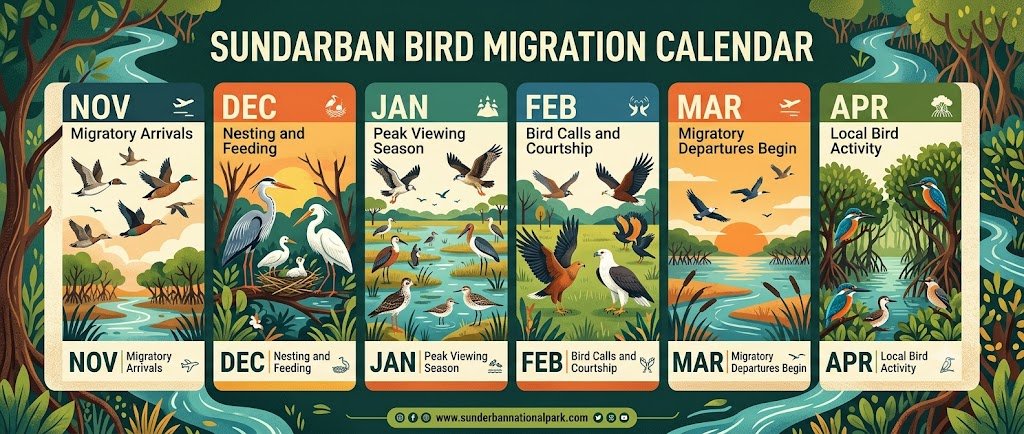
The table below outlines the avian activity and expected bird life across different months in the mangrove delta:
| Phase | Months | Avian Activity & Species Highlights |
|---|---|---|
| Early Arrival | October – November | First waves of migratory shorebirds, waders, and waterfowl appear as northern temperatures drop. |
| Peak Winter | December – January | Maximum diversity and bird density. Excellent sightings of Eurasian Curlews, Peregrine Falcons, and rare Black-capped Kingfishers. |
| Late Peak | February | Strong bird numbers continue before departure. Great weather for extended boat safaris. |
| Departure | March | Winter migrants thin out progressively. Active resident raptors like White-bellied Sea Eagles take focus. |
| Breeding Season | April – May | Winter guests depart. Highly sought-after local residents like the Mangrove Pitta begin their loud breeding calls. |
| Park Closure | June – August | The national park closes entirely to tourists for the wildlife breeding season. |
| Post-Monsoon | September | Dense green foliage fills the park. Local resident birds are highly active across the waterways. |