
 +
+
 By
By The Sundarbans is the world’s largest mangrove forest, covering approximately 9,630 square kilometers across India and Bangladesh. Formed by the Ganges, Brahmaputra, and Meghna river systems, it is the largest river delta on Earth. The Indian Sundarbans has been recognized as a UNESCO World Heritage Site since 1987 and is also an internationally important Ramsar Wetland.
The forest is famous for its incredible biodiversity and is the only mangrove ecosystem where the Royal Bengal Tiger lives naturally. It is also home to the Ganges River Dolphin, Irrawaddy Dolphin, Estuarine Crocodile, Indian Python, over 260 species of birds, and hundreds of fish species, including the popular Hilsa.
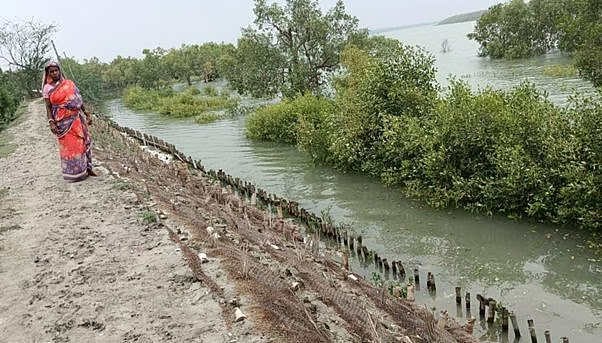
More than 4 million people depend on the Sundarbans for their livelihoods through fishing, farming, honey collection, and eco-tourism. The mangrove forest also acts as a natural barrier, protecting nearby communities from cyclones, tidal surges, and coastal erosion.
Climate Change and the Sundarbans
Climate change is one of the biggest threats to the Sundarbans. Rising sea levels, stronger cyclones, coastal erosion, and increasing salinity are damaging mangrove forests, wildlife habitats, farmland, and freshwater sources. Scientists warn that continued sea-level rise could significantly reduce the habitat of the Royal Bengal Tiger and threaten many low-lying islands.
Protecting the Sundarbans is essential not only for conserving its unique wildlife but also for safeguarding the millions of people who rely on this extraordinary ecosystem for their survival.