
 +
+
 By
By The Sundarbans is the world’s largest mangrove forest, formed where the Ganga, Brahmaputra, and Meghna rivers meet the Bay of Bengal. Hundreds of rivers and tidal creeks shape this unique delta, creating a landscape that is constantly changing.
Twice every day, high and low tides flood and expose the mangrove forests. High tides bring nutrient-rich water deep into the forest, while low tides reveal mudflats that support fish, crabs, birds, and other wildlife. This natural tidal cycle is essential for maintaining the Sundarbans’ rich biodiversity.
The Sundarbans is home to the Royal Bengal Tiger, estuarine crocodiles, Gangetic dolphins, spotted deer, otters, and more than 200 bird species. Its mangroves protect coastal communities from cyclones, reduce erosion, and support the livelihoods of millions of people.
The ever-changing tides make the Sundarbans one of the most fascinating and ecologically important ecosystems on Earth.
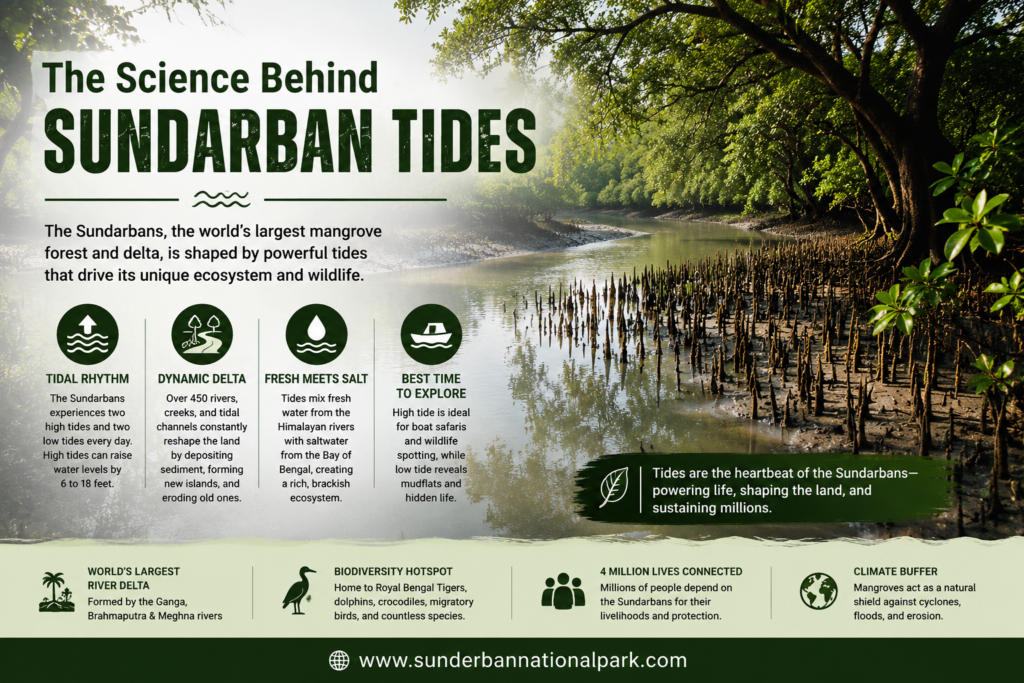
The Sundarbans is part of the world’s largest river delta, created by the Ganga, Brahmaputra, and Meghna rivers before they meet the Bay of Bengal. This unique delta is shaped by more than 450 rivers, creeks, and tidal channels, making it one of the most dynamic ecosystems on Earth.
The Sundarbans experiences two high tides and two low tides every day. During high tide, water levels can rise by 6 to 18 feet, flooding large parts of the mangrove forest. As the tide recedes, vast mudflats, creeks, and mangrove roots emerge, creating rich feeding grounds for fish, crabs, birds, and other wildlife.
These powerful tides continuously reshape the landscape by depositing sediment, forming new islands, and eroding old ones. The natural tidal cycle also mixes freshwater from the Himalayan rivers with saltwater from the Bay of Bengal, supporting the unique mangrove ecosystem and its incredible biodiversity.
For visitors, high tide is the best time for boat safaris and wildlife spotting, while low tide reveals the fascinating mudflats and the hidden life of the Sundarbans.
you can visit STR Wesbite