
 +
+
 By
By Sundarban National Park Wildlife Checklist – Complete Guide
The Sundarban National Park is one of India’s richest wildlife destinations and a UNESCO World Heritage Site. Famous for the Royal Bengal Tiger, the world’s largest mangrove forest is also home to saltwater crocodiles, fishing cats, otters, king cobras, spotted deer, hundreds of bird species, and fascinating aquatic creatures. A boat safari through its tidal rivers and mangrove creeks offers the best opportunity to experience this extraordinary biodiversity.
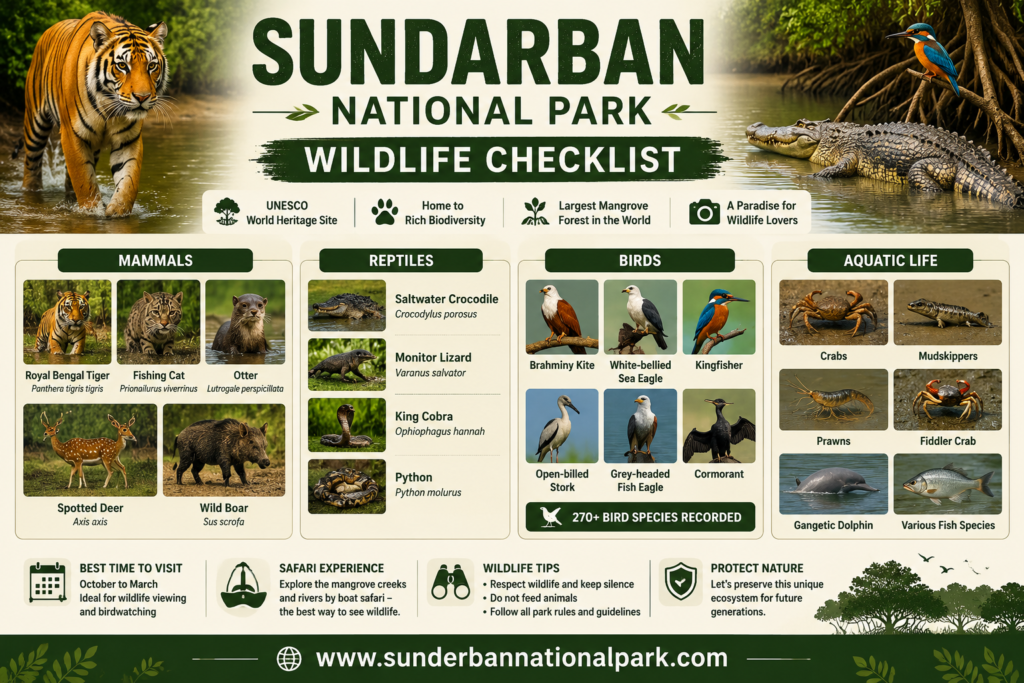
Sundarban National Park Wildlife Checklist
| Wildlife | Scientific Name | Chance of Sighting | Habitat |
| Royal Bengal Tiger | Panthera tigris tigris | Rare | Dense mangrove forest |
| Saltwater Crocodile | Crocodylus porosus | Moderate | Rivers & creeks |
| Fishing Cat | Prionailurus viverrinus | Rare | Mangrove wetlands |
| Smooth-coated Otter | Lutrogale perspicillata | Rare | Riverbanks |
| Water Monitor Lizard | Varanus salvator | Common | Mudflats & mangroves |
| King Cobra | Ophiophagus hannah | Very Rare | Forest interior |
| Indian Python | Python molurus | Rare | Dense vegetation |
| Spotted Deer (Chital) | Axis axis | Common | Forest edges |
| Wild Boar | Sus scrofa | Common | Mangrove forest |
Birds of Sundarban National Park
More than 270 bird species have been recorded in the Sundarbans, making it a paradise for birdwatchers.
| Popular Birds | Best Places to Spot |
| Brown-winged Kingfisher | Mangrove creeks |
| White-bellied Sea Eagle | River channels |
| Black-capped Kingfisher | Forest waterways |
| Lesser Adjutant Stork | Wetlands |
| Grey-headed Fish Eagle | Riverbanks |
| Brahminy Kite | Open rivers |
| Open-billed Stork | Mudflats |
| Cormorants | Creeks & rivers |
Reptiles
| Species | Habitat |
| Saltwater Crocodile | Estuaries & rivers |
| King Cobra | Dense forest |
| Indian Python | Mangroves |
| Water Monitor Lizard | Mudflats |
| Rat Snake | Forest area |
| Checkered Keelback | Freshwater creeks |
Aquatic Life
The Sundarbans supports one of India’s richest estuarine ecosystems.
| Aquatic Species | Where to Find |
| Mudskippers | Mudflats |
| Fiddler Crabs | Mangrove banks |
| Hermit Crabs | Sandy shores |
| Prawns | Estuaries |
| Shrimps | Rivers |
| Gangetic Dolphin | Deep river channels |
| Various Fish Species | Rivers & creeks |
Best Time for Wildlife Sighting
| Season | Wildlife Experience |
| October – February | Excellent birdwatching and comfortable weather |
| March – May | Higher chance of spotting reptiles and mammals |
| June – September | Lush greenery but heavy rainfall limits safaris |
Wildlife Safari Tips
- Book an authorized boat safari.
- Carry binoculars and a zoom camera.
- Wear neutral-colored clothing.
- Maintain silence during the safari.
- Never feed or disturb wildlife.
- Follow all forest department regulations.
Conclusion
A Sundarban National Park wildlife safari offers an unforgettable opportunity to observe one of the world’s most unique mangrove ecosystems. From the legendary Royal Bengal Tiger and Saltwater Crocodile to colorful kingfishers, playful otters, mudskippers, and thousands of crabs, every boat safari reveals the incredible biodiversity of this UNESCO World Heritage Site. Visit between October and March for the best wildlife viewing and birdwatching experience.