
 +
+
 By
By Royal Bengal Tiger in Sundarbans: Facts, Habitat & Wildlife Guide
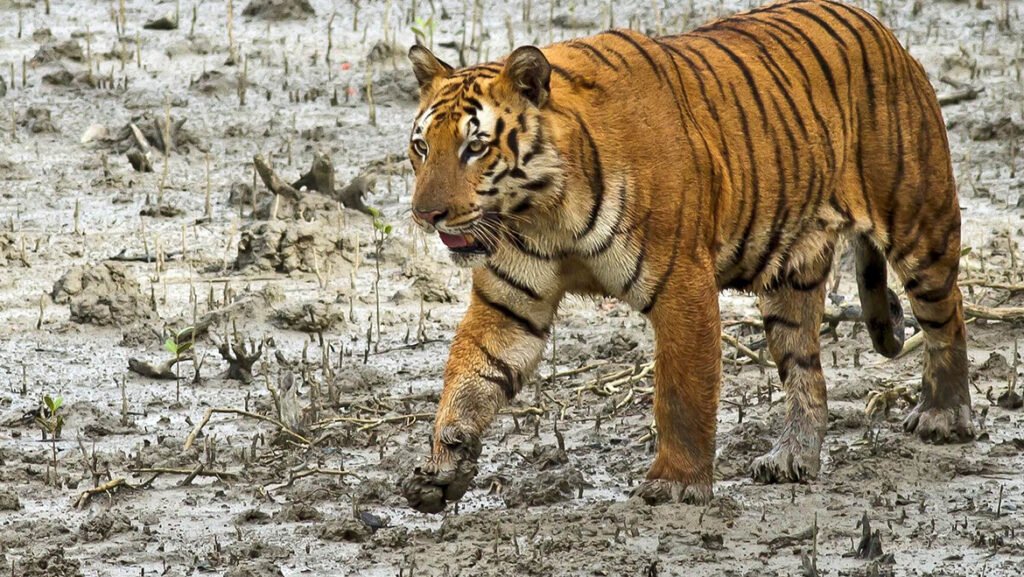
The Royal Bengal Tiger is the undisputed king of the Sundarbans, the world’s largest mangrove forest and one of India’s most unique wildlife destinations. Known for its strength, swimming ability, and mysterious nature, the Sundarbans tiger has adapted to survive in a challenging environment of tidal rivers, muddy islands, and dense mangrove forests.
Unique Habitat of the Sundarbans Tiger
Unlike tigers living in grasslands or dry forests, the Royal Bengal Tigers of Sundarbans thrive in a saline mangrove ecosystem spread across India and Bangladesh. Rising tides, shifting islands, and thick mangrove vegetation have shaped these tigers into highly skilled swimmers and stealth hunters.
Key Adaptations
- Excellent swimmers capable of crossing wide rivers.
- Strong tolerance to brackish and saltwater environments.
- Lean, agile bodies suited for muddy terrain.
- Exceptional camouflage among mangrove roots and forests.
- Flexible diet including spotted deer, wild boar, fish, crabs, and monkeys.
Hunting and Behaviour
Sundarbans tigers are solitary predators that rely on stealth and surprise. They use dense mangrove cover to stalk prey and often adjust their hunting patterns according to tidal movements. Their ability to adapt to changing environmental conditions makes them one of the most resilient tiger populations in the world.
Conservation Status
The Royal Bengal Tiger is listed as an Endangered species. Conservation efforts led by Project Tiger, the Sundarban Tiger Reserve, WWF, and wildlife authorities focus on habitat protection, anti-poaching measures, camera-trap monitoring, and community awareness programs.
Human-Tiger Relationship
The Sundarbans is home to both people and tigers. Local fishermen, honey collectors, and forest workers often share the landscape with these apex predators. Modern conservation programs aim to reduce human-tiger conflict through education, compensation schemes, and sustainable livelihood initiatives.
Best Time to Visit Sundarbans
The ideal season for a Sundarban wildlife tour is from October to March. During winter, visibility improves, wildlife activity increases, and visitors have the best opportunity to experience the natural beauty of the mangrove forest.
Why the Royal Bengal Tiger Matters
As the top predator of the Sundarbans ecosystem, the Royal Bengal Tiger helps maintain ecological balance by controlling prey populations and supporting healthy mangrove forests. Its survival is closely linked to the future of one of the world’s most important coastal ecosystems.
A Sundarban tour is not just about spotting a tiger—it’s about exploring a UNESCO World Heritage mangrove forest where nature, conservation, and adventure come together in an unforgettable wildlife experience.